The Plagiarism Panic: What Every US Student Gets Wrong About Paraphrasing (and How to Do It Right)
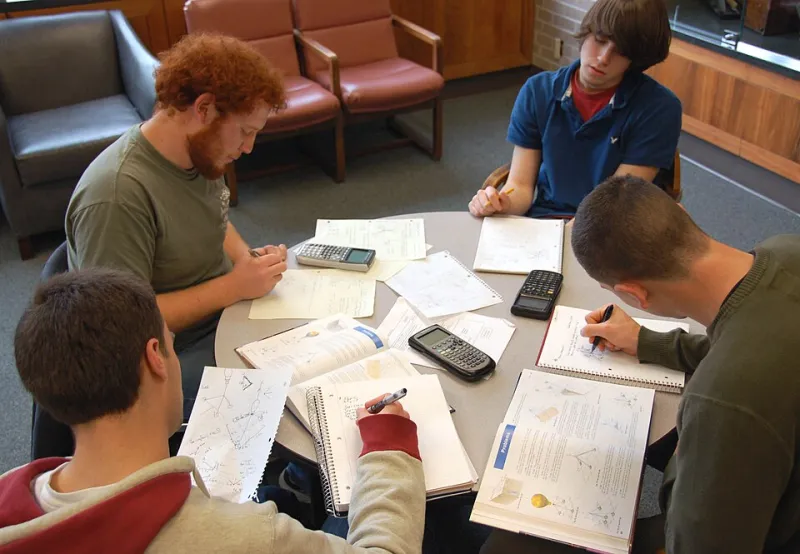
Photo: Tulane Public Relations, CC BY 2.0, via Wikimedia Commons
Ask a college sophomore to define plagiarism and you'll usually get a nervous guess: "changing some words?" Ask the same student to define paraphrasing and the guesses get vaguer. This confusion has real consequences. Every year, students at universities across the United States face academic integrity hearings not because they cheated, but because nobody clearly taught them where rewriting ends and theft begins.
The Myth That Gets Students Flagged
The most persistent myth in American classrooms is that swapping synonyms makes text yours. It doesn't. Run a source paragraph through a thesaurus and you've produced what integrity officers call a "patchwork paraphrase" — the original structure, sequence, and ideas remain, dressed in different vocabulary. Detection software catches this easily, and so do professors who've read the source.
The second myth: citation is only for direct quotes. In reality, ideas need attribution regardless of how you express them. A beautifully reworded passage with no citation is still plagiarism. A quoted passage with proper attribution never is. The protection comes from credit, not from camouflage.
The third myth: common knowledge needs a citation. It doesn't. That George Washington crossed the Delaware, that water boils at 212°F, that the Civil War ended in 1865 — these need no sourcing. But a historian's specific argument about why Washington crossed when he did? That's someone's intellectual property.
Where the Actual Line Sits
Legitimate paraphrasing requires three things, and all three at once:
- Genuine transformation — your own sentence structure, your own phrasing, your own organization of the ideas.
- Attribution — an in-text citation and a reference entry, in whatever style your institution requires.
- Understanding — you could explain the idea to a classmate without looking at the source.
Miss the first element and you've plagiarized. Miss the second and you've plagiarized. Miss the third and you're one exam question away from discovering it yourself.
A Step-by-Step Method That Holds Up
Step 1: Read the passage fully, then close it. Physically shut the book or minimize the tab. If you can't summarize the point from memory, you haven't understood it yet — reread.
Step 2: Write the idea from memory, in your own voice. Not synonyms swapped into the original structure. A fresh reconstruction, as if explaining it to a friend over coffee.
Step 3: Reopen the source and compare. Check that you haven't echoed distinctive phrases or the original's sentence rhythm. If any wording matches, rework it — or, if the phrasing itself is brilliant, quote it properly with quotation marks.
Step 4: Cite immediately, not later. The students who get flagged are usually the ones who planned to "add citations at the end" and lost track of what came from where. Cite at the moment of writing.
Step 5: Read your paraphrase cold. Does it flow as part of your essay, or does it feel bolted on? A good paraphrase serves your argument; it doesn't interrupt it.
Paraphrasing tools can assist at step two by offering alternative phrasings of your own draft — but treat their output as raw material. The ethical weight always rests on your comprehension and your citation, never on the software.
Panic Less, Practice More
Academic integrity isn't a minefield; it's a craft standard. The students who thrive aren't the ones who avoid sources out of fear — they're the ones who engage with them confidently and credit them scrupulously. Learn the line, practice the method, and paraphrasing stops being a panic and becomes what it was always meant to be: proof that you've actually learned something.